Context
Office and dress code
The only context on this site where the reader holds the specification. You know what your workplace accepts; no seller does. Which makes it striking how few of these listings bother to say anything about it, and how much the ones that do actually help.
What actually decides it
5 things, in order
A dress code you already know
Office wear, business casual, casual. Three listings in this catalog name a workplace context and they are more useful than any claim word, because you can check them against a rule you already have.
Whether the shoe is closed and how closed
Closed toe, low top, enclosed. These are construction facts, they are visible, and several listings state them plainly. Dress codes are usually written in exactly this vocabulary.
Material, where it is named at all
Leather, suede, canvas and textile all read differently in an office, and roughly a third of this catalog names a material. Grade — full grain, top grain — appears exactly once in sixty-six listings.
Heel height and platform, where stated
No listing in this whole catalog gives a height figure. Every listing that raises the sole describes it as a platform, chunky or bold, and gives no number at all.
Whether it can be adjusted while you are wearing it
An office day is long and a shoe you cannot loosen is a shoe you cannot loosen. Closure is stated by fewer than half of these listings, and by almost none of the loafers.
Which listing words land here
2 of the 8
- WidePublished method, voluntary
Width designations are a long-standing trade convention rather than a regulated system, and they vary between makers. Not one listing in this catalog gives a numerical width.
4 listings in the catalog use it
- Arch supportMarketing only
No standards body, trade association or regulator publishes a definition of arch support for footwear, and no listing in this catalog gives it a shape, a height or a test.
18 listings in the catalog use it
What this context does not fix (4)
- A dress code is not a fit. The most office-appropriate shoe in the catalog is still sized by a chart you have to read yourself.
- A material named in a listing is not a grade, and grade appears once across sixty-six listings.
- Nothing here addresses feet that hurt at a desk, which is a conversation with a clinician rather than a shopping decision.
- No listing states a heel height except one, so the visual effect of a raised sole has to be judged from photographs.
Sources (3)
4 listings that claim something relevant here
Chosen because their text uses a word this context is about. Not because any of them was tested, ranked or recommended, because none of that has happened.
Stated once here rather than on every card, because it is the same on all 4: not one of these listings uses any of the eight claim words.
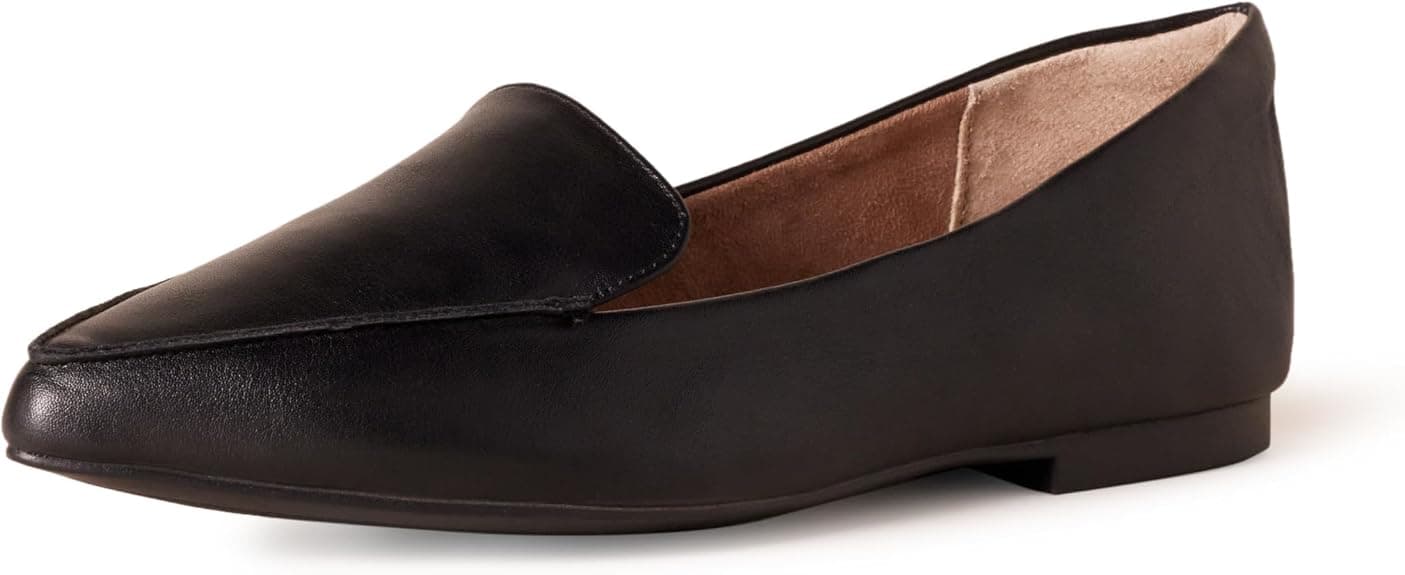
Amazon Essentials Women’s Loafer Flat
The listing states a loafer flat for office wear.
Closure statedNo closure stated
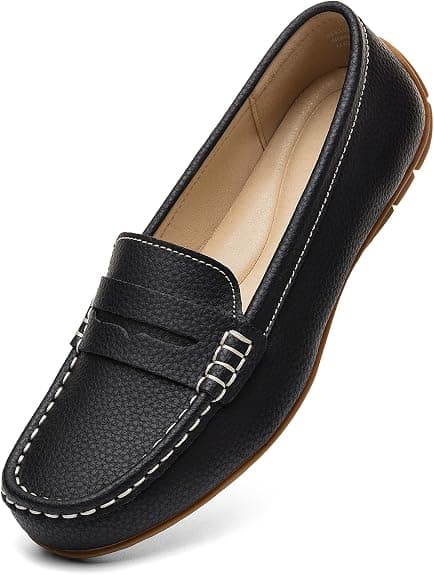
KORDAL Leather Penny Loafers
The listing states lightweight leather penny loafers for business casual wear.
Closure statedNo closure stated
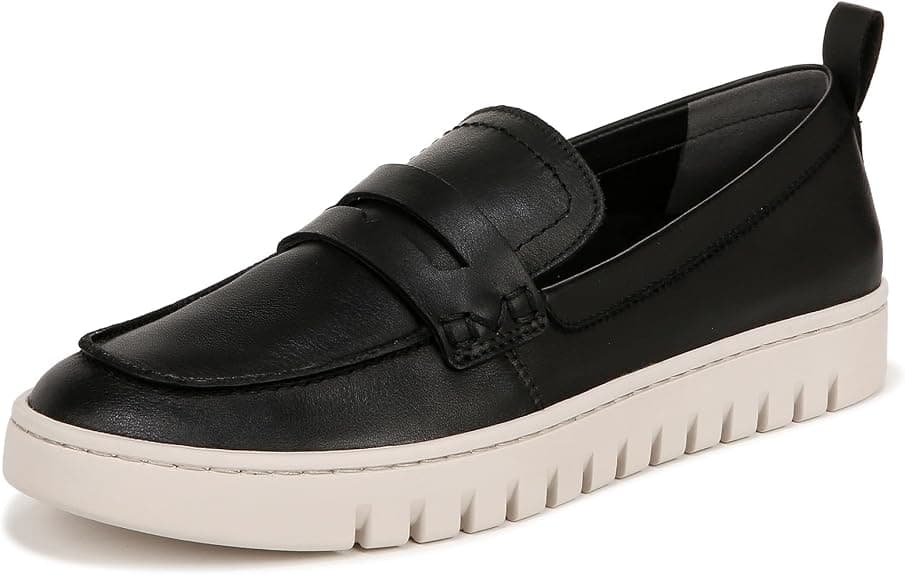
Vionic Women’s Uptown Loafer
The listing states a leather loafer.
Closure statedNo closure stated
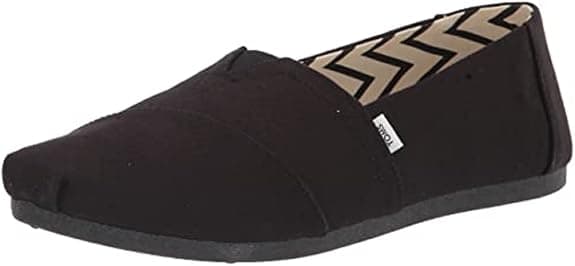
TOMS Alpargata Classic Slip-On
The listing states a textile upper espadrille slip-on.
Closure statedSlip-on or slip-in